Economic Calendar: Knowing When Volatility Is Scheduled
You cannot predict most market-moving events. You can know exactly when several of them are due.
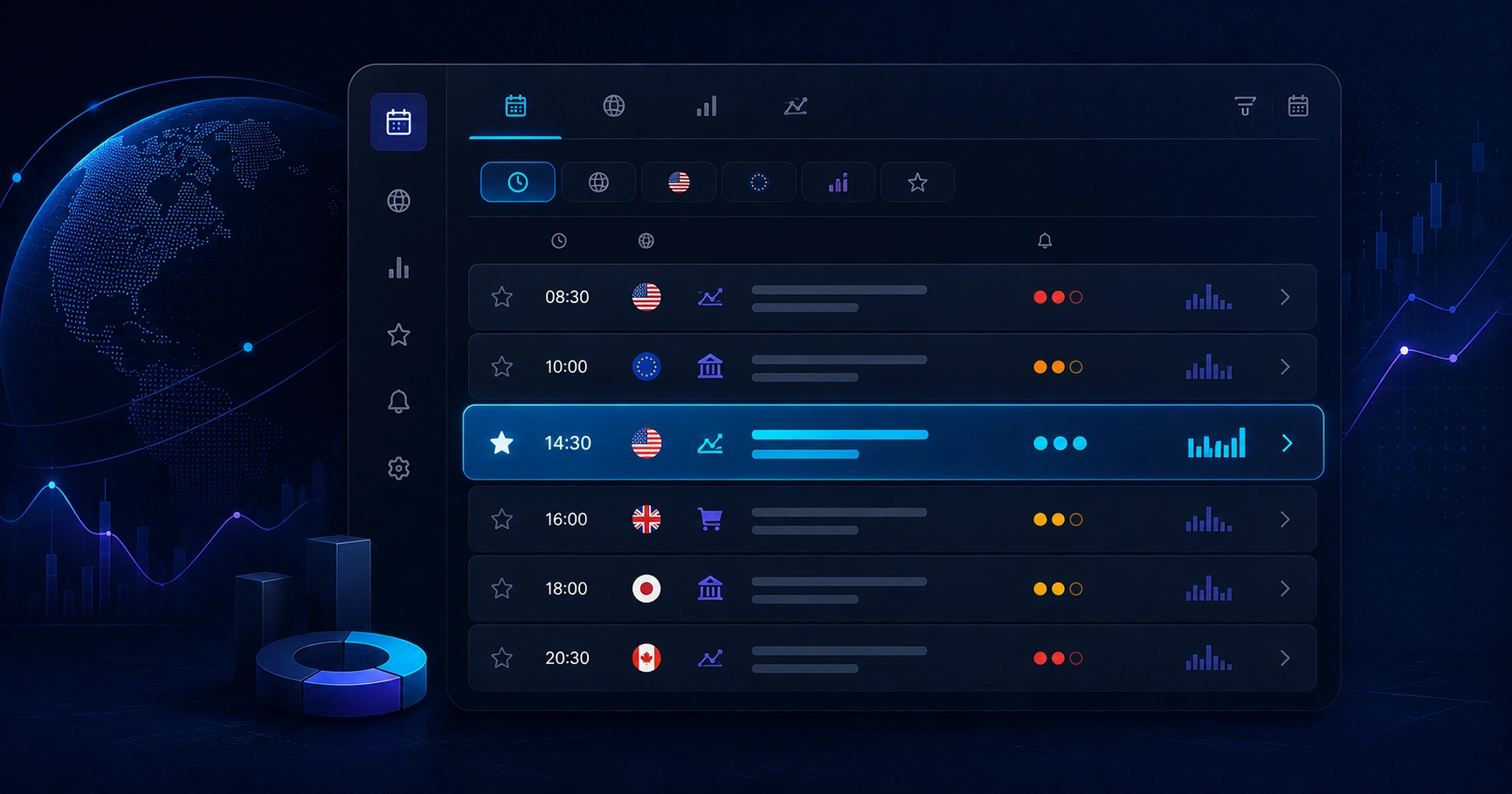
Most market-moving information arrives without warning. A meaningful subset does not — scheduled data releases are published in advance, down to the minute.
What the calendar shows
Upcoming releases with their scheduled time, the affected currency or market, the consensus forecast, and the previous figure. Events are typically rated by expected impact.
The consensus forecast is the important column. Markets have already priced it. What moves prices is the deviation from it.
The events that consistently matter
- Central bank rate decisions and the guidance that accompanies them
- Inflation data, which drives rate expectations directly
- Employment reports, particularly US non-farm payrolls
- GDP releases
- Purchasing managers' indices, which are timely and forward-looking
Its most valuable use is defensive
The calendar is more useful for deciding when not to trade than for deciding when to.
Holding a leveraged position through a major release without knowing it was scheduled is an avoidable error. Spreads widen dramatically in the seconds around a release, stops fill far from their level, and direction can reverse twice within a minute.
Checking the calendar before entering a position is a thirty-second habit that prevents a specific and recurring category of loss.
Reading impact ratings
Ratings are approximations. A medium-impact release can move markets substantially if it contradicts a prevailing narrative, and a high-impact release can pass quietly if it lands exactly on expectations. The rating describes typical behaviour, not this instance.
Time zones
An unglamorous but frequent source of error. Confirm the calendar is displaying your local time, particularly across daylight-saving changes, when a release you expected in the afternoon arrives an hour early.
A practical routine
Check the day's events before your session. Note anything high-impact affecting instruments you hold or plan to trade. Decide in advance whether you will reduce exposure into those windows — and make that decision while calm, not while watching the clock count down.
TradePredictor provides analytical tools for informational purposes only and does not provide financial advice. Trading around scheduled news carries elevated risk.
See the models in action
Reading about forecasting is one thing. Create a free account and get 5 AI predictions a month — no card required.
Start free