How Economic Calendar Events Move Prices
Scheduled data releases are among the few moments in markets where you know in advance that volatility is coming. What you cannot know is the direction.
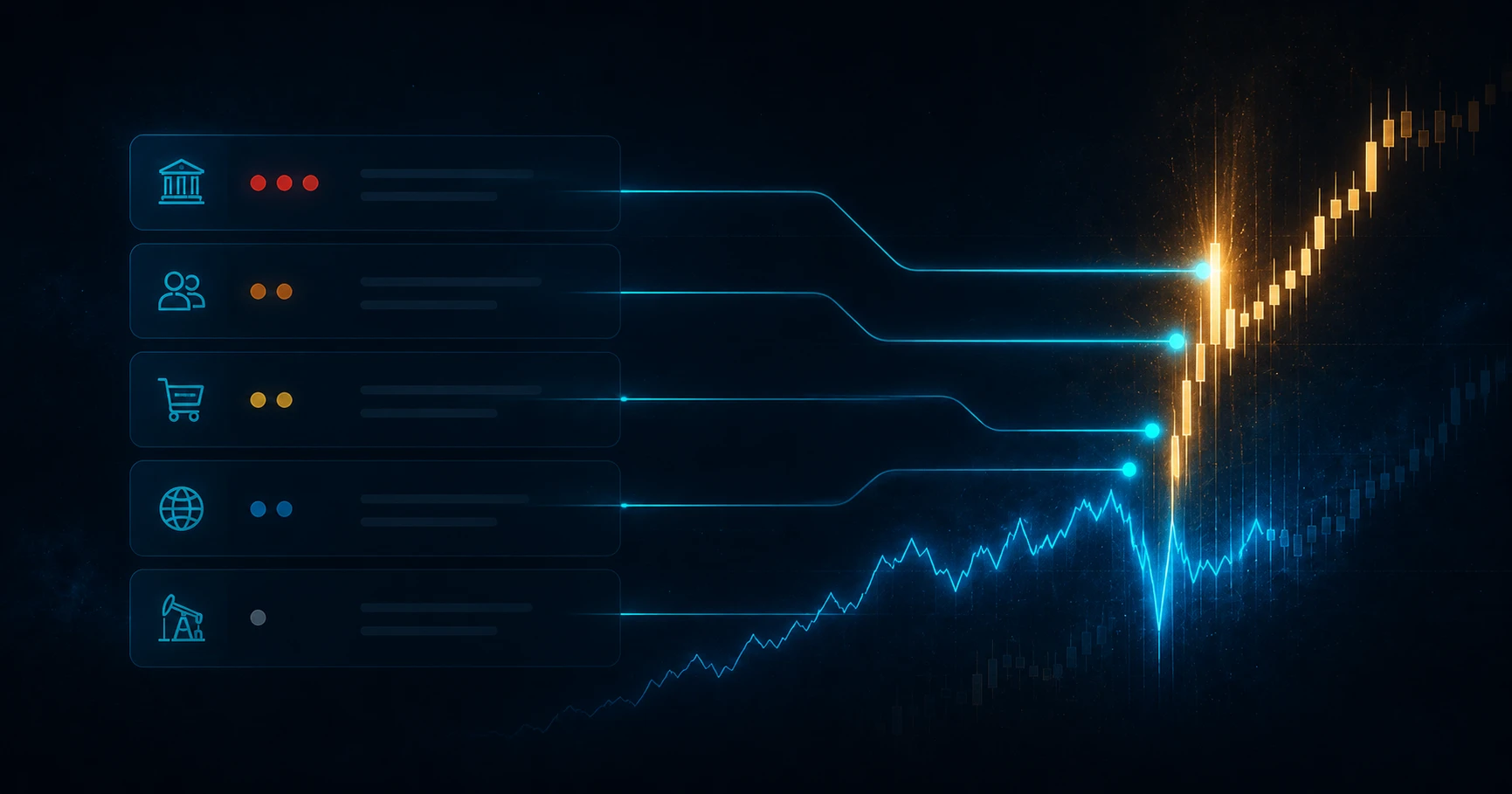
Economic releases are unusual in that their timing is published in advance. That makes them the rare case where you can anticipate elevated volatility with confidence, even though you cannot anticipate its direction.
The releases that consistently matter
- Central bank rate decisions — the largest scheduled mover, particularly the accompanying guidance.
- Inflation data (CPI) — directly shapes rate expectations, which is the transmission channel.
- Employment reports — US non-farm payrolls remains the single most reliably volatile monthly release.
- GDP — broad but often anticipated by earlier partial data.
- Purchasing managers' indices — timely and forward-looking, so they move markets more than their simplicity suggests.
Expected versus actual
Every release carries a consensus forecast. The market has already priced that forecast. What moves prices is the deviation from it — and the magnitude of the reaction scales with the size of the surprise, not the level of the number.
Strong data can be met with selling if the market expected stronger. This is the single most common source of confusion around economic releases.
Revisions
Previous figures are frequently revised alongside the new print. A modest beat accompanied by a large downward revision to prior months can produce a negative reaction to an apparently positive headline. The revision is genuine new information about the recent past.
What actually happens in the first minute
Spreads widen, liquidity thins, and the initial move frequently reverses once the detail is read.
Algorithmic systems react in milliseconds to the headline number. Humans then read the composition and sometimes disagree with the first interpretation. The result is a violent initial move followed, quite often, by a partial or complete retracement.
Sensible handling
Most traders benefit from treating scheduled events as a risk-management matter rather than an opportunity. Knowing that a high-impact release lands in ten minutes is a reason to check exposure and stop placement, since stops are far more likely to fill poorly during that window.
If you do trade around releases, the volatility is genuinely available — but so is the execution risk, and the two arrive together.
Educational content only. Not financial advice. Trading around news events carries elevated risk.
See the models in action
Reading about forecasting is one thing. Create a free account and get 5 AI predictions a month — no card required.
Start free