How TradePredictor Generates a Forecast
A walkthrough of what happens between you selecting an asset and a prediction appearing, including the parts that constrain what any model can do.

People ask what the model is. The more useful answer describes the whole pipeline, because the model is rarely the part that determines output quality.
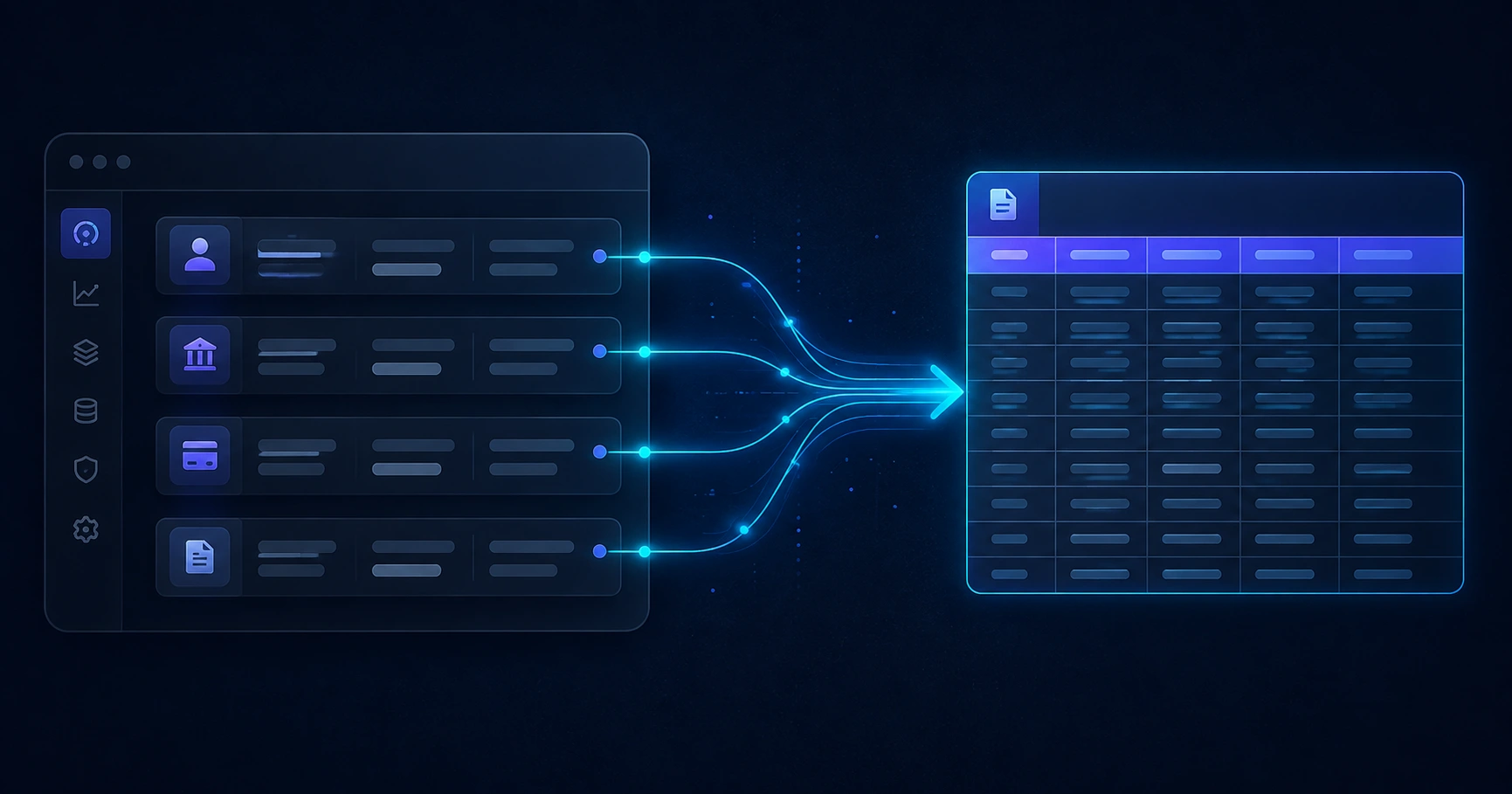
1. Market data
Historical and current price data is retrieved for the selected instrument across forex, crypto, equities and commodities. Data is validated before use — gaps, stale quotes and obviously erroneous prints are common in market feeds and will quietly corrupt any model fed them.
2. Feature construction
Raw prices are converted into features a model can learn from. Returns rather than price levels, realised volatility, volume relative to its own average, momentum across several horizons, and range-based measures. All computed strictly from information available at that point in time.
3. The ensemble
Rather than one model, three families run in parallel:
- ARIMA — captures linear short-horizon structure and behaves predictably.
- LSTM — a recurrent network able to represent sequence effects and non-linear relationships.
- Gradient-boosted trees — strong on engineered features and feature interactions.
These are combined because they fail differently. A statistical model lags regime change; a neural network can overfit; a tree model cannot extrapolate. Their errors are substantially uncorrelated, which is the entire reason for combining them.
4. Confidence scoring
The confidence figure is derived partly from how closely the three components agree. Broad agreement in stable conditions produces a higher score. Divergence — which typically occurs when current conditions are unusual — lowers it.
Model disagreement is information. It is the clearest available signal that conditions fall outside what the models handle well.
What this cannot do
No pipeline anticipates genuinely unexpected news. A model can be maximally confident based on everything knowable and be wrong immediately because something unknowable occurred. Forecasts describe probable continuation given observable conditions, not certainty.
Accuracy also varies by instrument and regime. Liquid, trending markets are more tractable than thin, choppy ones, and no honest system claims a single accuracy figure that holds everywhere.
How to use the output
As one input among several, weighted by its confidence score, alongside your own analysis and a risk framework that assumes some forecasts will be wrong. That is the appropriate role for any forecasting tool.
TradePredictor provides analytical tools for informational purposes only and does not provide financial advice. Trading involves substantial risk of loss.
See the models in action
Reading about forecasting is one thing. Create a free account and get 5 AI predictions a month — no card required.
Start free