The Performance Page: Seeing How the Models Actually Did
Any forecasting tool can claim accuracy. The useful version shows the record, including the periods where it underperformed.
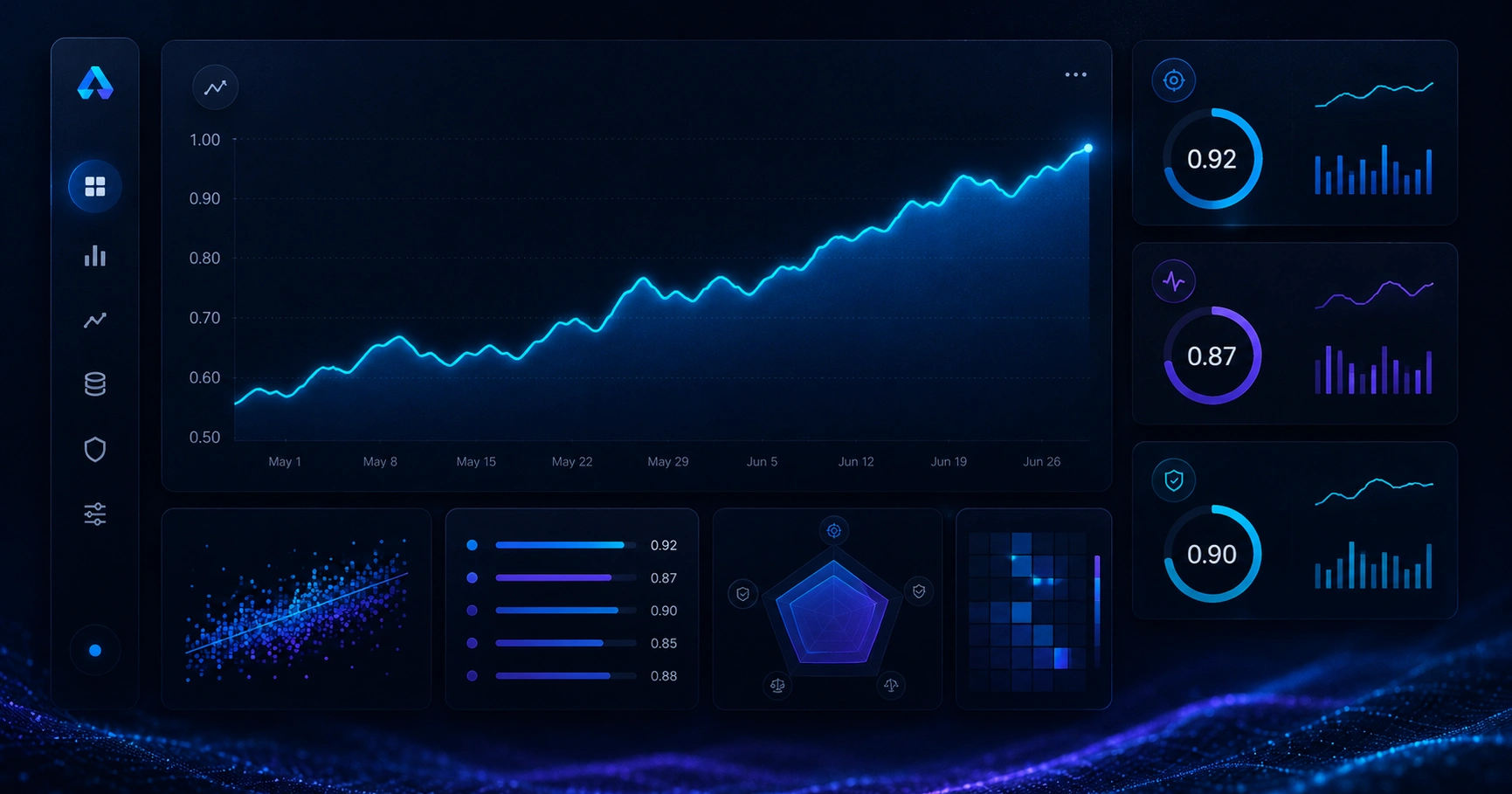
Accuracy claims are easy to make and hard to verify. Publishing an ongoing record is the more useful approach, because it can be checked against periods when things went badly.
Why a single accuracy number misleads
"78% accurate" invites an obvious question: on what, over what period, and measured how? Accuracy varies substantially by:
- Instrument. Liquid major pairs behave differently from thin altcoins.
- Regime. Trending markets are more forecastable than choppy ones.
- Horizon. Short-horizon direction is a different problem from multi-day movement.
- Period. Any system has good and bad stretches, and averages hide both.
A single headline figure compresses all of that away, which is why it should be treated as a summary rather than a specification.
What to look at instead
Consistency matters more than the peak. A model at 62% across most periods is more trustworthy than one averaging 70% because of two exceptional months surrounded by mediocrity. The second is far more likely to be fitted to a specific stretch of history.
A stable, moderate accuracy is a better sign than a high, erratic one.
Backtested versus live
These are fundamentally different claims. Backtested results are produced with the benefit of knowing the full history, and even with careful methodology they flatter. Live results include everything that goes wrong in reality.
Expect live performance to be worse than backtested performance. Any system where that gap is zero deserves scrutiny rather than admiration.
Accuracy is not profitability
This is the most important caveat. A model can be directionally right 70% of the time and still lose money if the losses are larger than the wins. Direction is one component; position sizing, exits and costs determine outcomes.
Forecast accuracy is an input to a trading process, not a substitute for one.
How to use the page
Check whether accuracy in the conditions you trade resembles the headline figure, and whether recent performance has drifted from the longer record. Drift is a legitimate reason to reduce reliance, and noticing it early is the point of publishing the data at all.
TradePredictor provides analytical tools for informational purposes only and does not provide financial advice. Historical accuracy does not guarantee future results. Trading involves substantial risk of loss.
See the models in action
Reading about forecasting is one thing. Create a free account and get 5 AI predictions a month — no card required.
Start free