Risk-Reward Ratio Explained
A 3:1 ratio is meaningless without a win rate attached. The two numbers only mean something together.
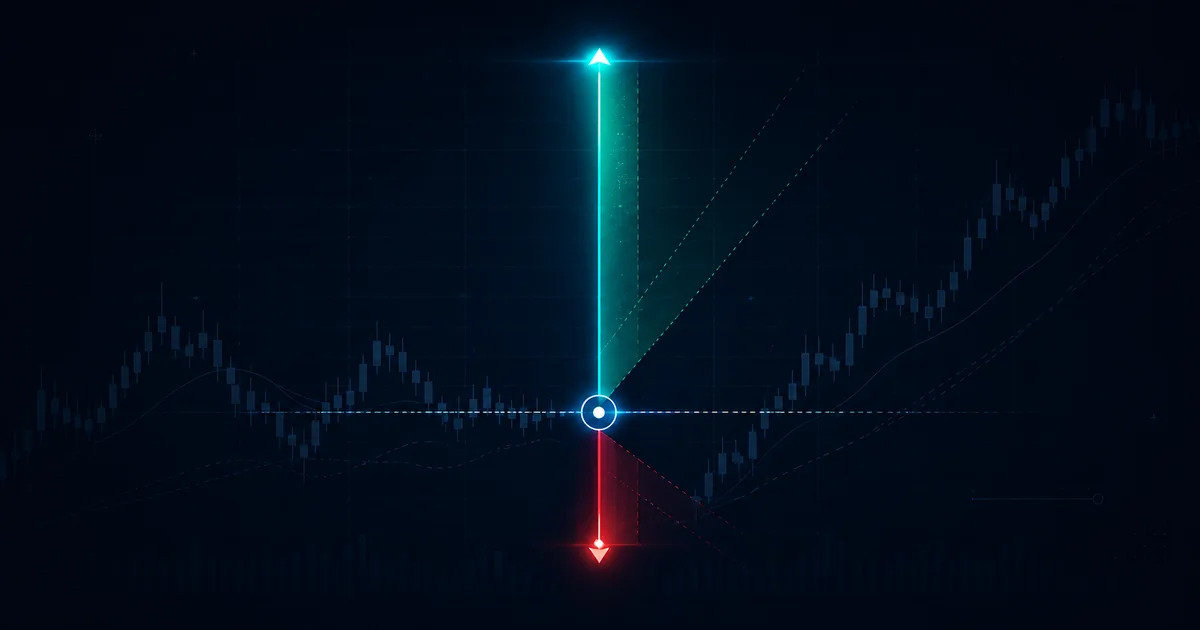
Risk-reward ratio compares what you stand to lose against what you stand to gain. Risking 100 to make 300 is 3:1. The number is simple; the way it is commonly used is not.
It means nothing alone
A 5:1 ratio sounds excellent. If it wins 10% of the time, you lose money. A 1:1 ratio sounds mediocre. If it wins 65% of the time, it is strongly profitable.
The breakeven win rate for a given ratio is straightforward:
- 1:1 — needs above 50%
- 1.5:1 — needs above 40%
- 2:1 — needs above 33%
- 3:1 — needs above 25%
- 5:1 — needs above 17%
These are before costs. Spread and commission raise every threshold, and by more than most people assume on short-term strategies.
The trade-off nobody escapes
Wider targets are hit less often. That is not a flaw in your strategy, it is a property of price. Pushing your target from 2:1 to 4:1 will improve the ratio and reduce the win rate, and the net effect on profitability may be negative.
You cannot choose your risk-reward ratio independently of your win rate. Improving one degrades the other.
Expectancy is the real measure
Expectancy = (Win rate × Average win) − (Loss rate × Average loss)
This single figure incorporates both variables and tells you what you earn per trade on average. A strategy with positive expectancy makes money over enough trades regardless of how the ratio and win rate are distributed between them.
The planned-versus-actual gap
Most traders' realised ratio is worse than their planned ratio, for a consistent reason: they exit winners early out of anxiety and let losers run past the stop out of hope. A planned 3:1 becomes a realised 1.2:1, which turns a profitable system into a losing one without a single entry signal changing.
Tracking planned against realised ratio is one of the more revealing things a trading journal can show you.
Educational content only. Not financial advice.
See the models in action
Reading about forecasting is one thing. Create a free account and get 5 AI predictions a month — no card required.
Start free