Saved Predictions and Tracking What Actually Happened
The difference between traders who improve and traders who repeat mistakes is almost entirely whether they keep records.
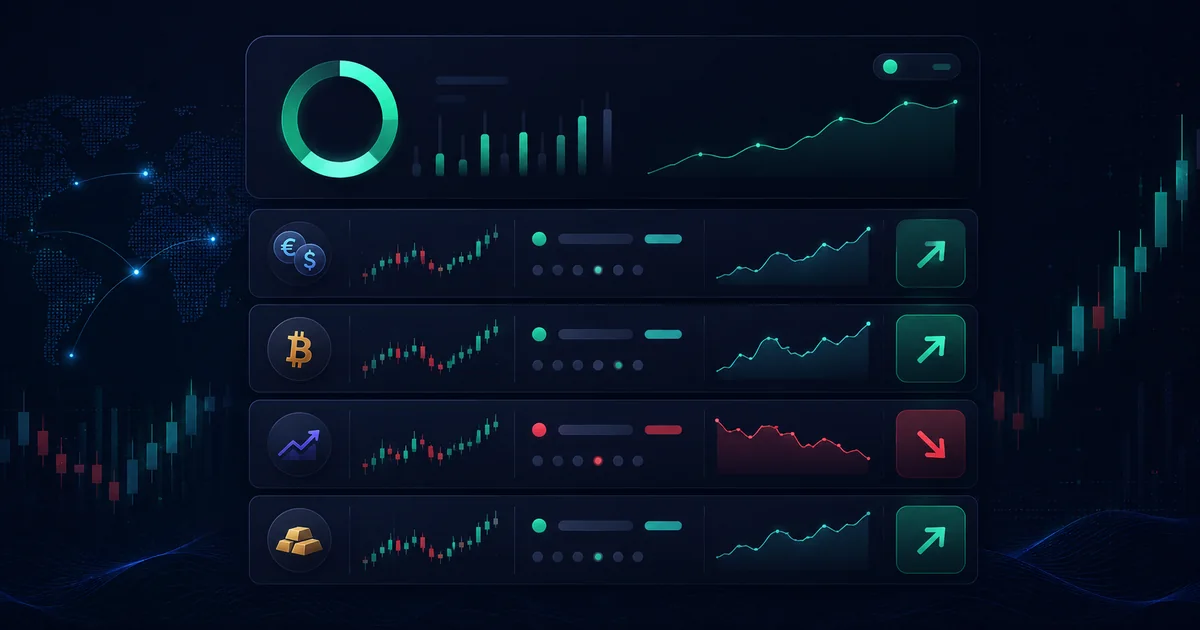
Ask a trader how they performed last quarter and you will usually get an impression rather than a figure. Memory is selective in a specific direction: losses fade, wins are recalled vividly, and near-misses get remembered as if they had been taken.
Why records change behaviour
A tracked record removes the negotiation. You either followed your process or you did not, and the data says which. That is uncomfortable, and it is the only reliable basis for improvement.
You cannot improve a process you are remembering rather than measuring.
What a record surfaces
- Whether your accuracy matches your assumptions. Most traders overestimate their hit rate substantially.
- Which conditions suit you. Performance frequently varies enormously by instrument, session or volatility regime, and this is invisible without data.
- The gap between planned and realised risk-reward. Almost always worse than intended, because winners get closed early.
- Whether confidence levels correspond to outcomes. Do your high-conviction ideas actually perform better?
The one that matters most
The planned-versus-realised gap is where most improvement is found. A trader planning 2.5:1 and realising 1.1:1 does not have an analysis problem — they have an exit discipline problem, and no amount of better entries will fix it.
That diagnosis is impossible without records, which is why it goes unaddressed for years in most trading careers.
Reviewing usefully
Review on a schedule — monthly, or every fifty entries — not after individual outcomes. Reviewing after a loss produces reactive changes to a process based on a sample of one, which is how a coherent method degrades into improvisation.
Look for patterns across the set: not "why did this fail" but "what do my failures have in common".
Marking outcomes honestly
Record what happened, including the ones you would rather not. A record with the embarrassing entries omitted is worse than no record, because it produces confident conclusions from filtered data.
TradePredictor provides analytical tools for informational purposes only and does not provide financial advice. Past performance does not guarantee future results.
See the models in action
Reading about forecasting is one thing. Create a free account and get 5 AI predictions a month — no card required.
Start free