Walk-Forward Validation vs Train-Test Split
The standard machine learning split assumes your rows are interchangeable. Time series rows are not, and that assumption quietly invalidates most financial backtests.
Standard machine learning practice says shuffle your data and split it randomly. Apply that to a price series and you have already invalidated the result, because you will be training on Thursday to predict Wednesday.
Why random splitting breaks
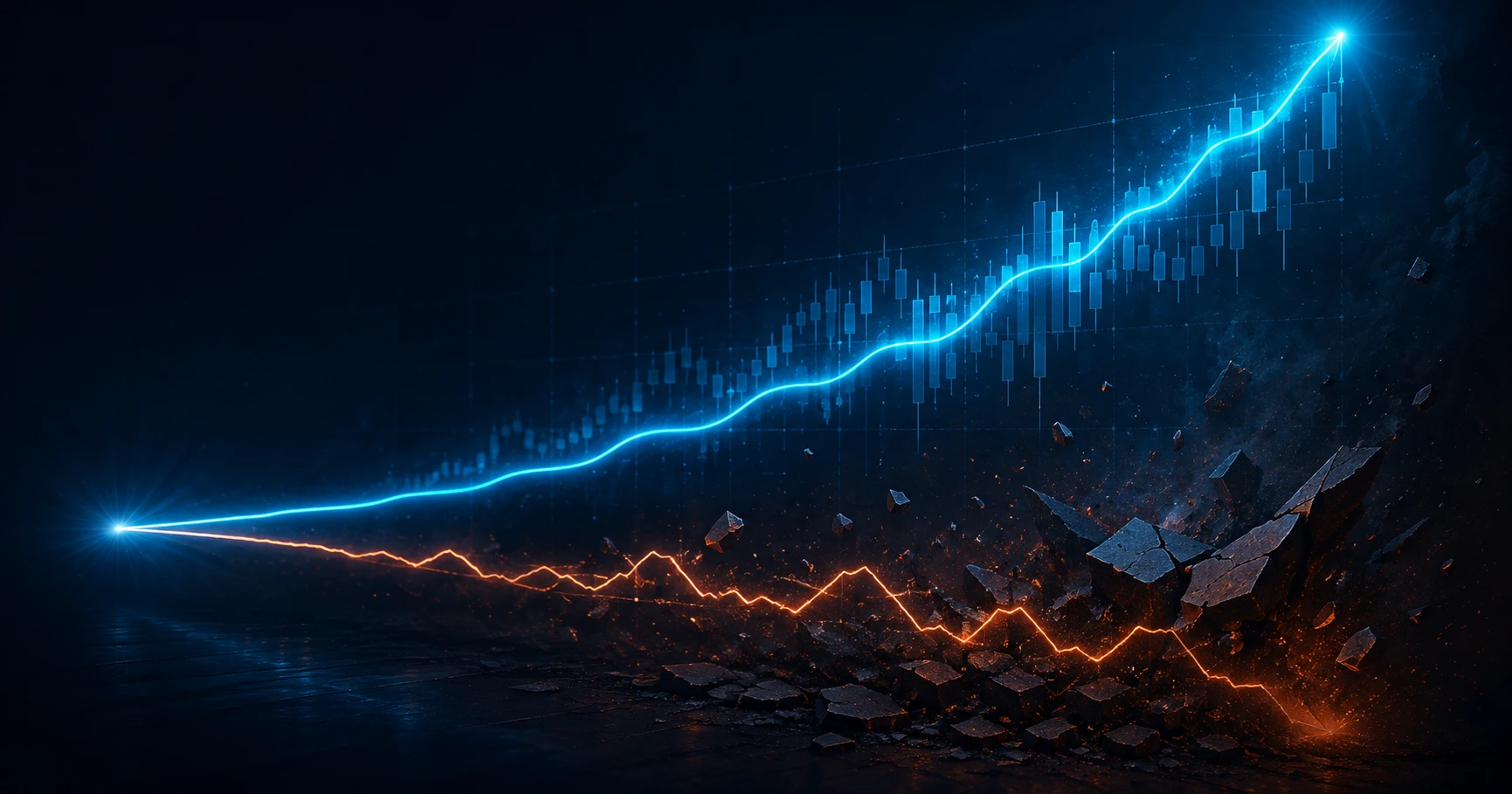
Shuffling destroys temporal order. Rows adjacent in time are highly correlated, so a random split puts nearly identical observations in both training and test sets. The model appears to generalise when it is really recognising neighbours it has already seen.
Standard k-fold cross-validation has the same flaw for the same reason. Every fold except the last trains partly on the future.
What walk-forward does instead
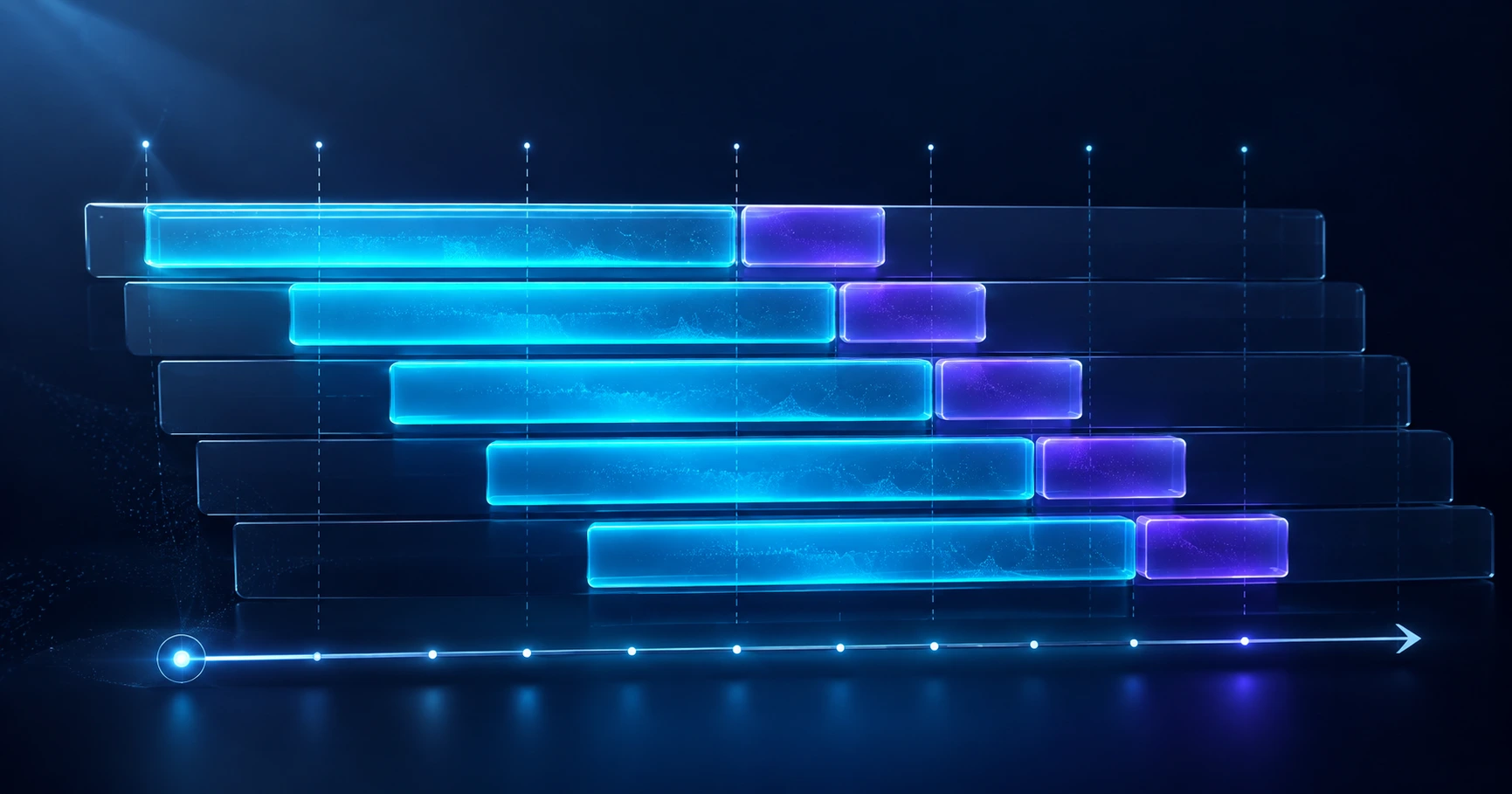
Walk-forward validation respects the arrow of time. Train on a window, test on the period immediately after it, then roll everything forward and repeat. Every test period is strictly later than the data used to produce the model that is being tested.
Two variants exist:
- Expanding window — training data grows with each step, keeping all history. Better when older data stays relevant.
- Rolling window — training length stays fixed and the oldest data drops off. Better when markets change enough that ancient history misleads.
The gap nobody mentions
Leave a small gap between the end of training and the start of testing. If your features use a twenty-period rolling window, the first few test observations were partly computed from training-period data. The gap removes that contamination.
What you gain
Beyond honesty, you gain a distribution rather than a single number. Instead of "the model scored 62%", you get performance across many periods and can see whether it was consistent or whether one exceptional stretch carried the average.
A single backtest number is an anecdote. A walk-forward series is evidence about stability.
The cost
It is slower, because you retrain repeatedly rather than once. It also produces worse-looking results — which is the point. A model that scores 78% on a random split and 54% walking forward was always a 54% model.
The final discipline
Keep a block of the most recent data completely untouched while you develop. Look at it once, at the end. If you look repeatedly and adjust, it has silently become part of your training process and you have lost your only honest estimate.
Educational content only. Not financial advice.
See the models in action
Reading about forecasting is one thing. Create a free account and get 5 AI predictions a month — no card required.
Start free