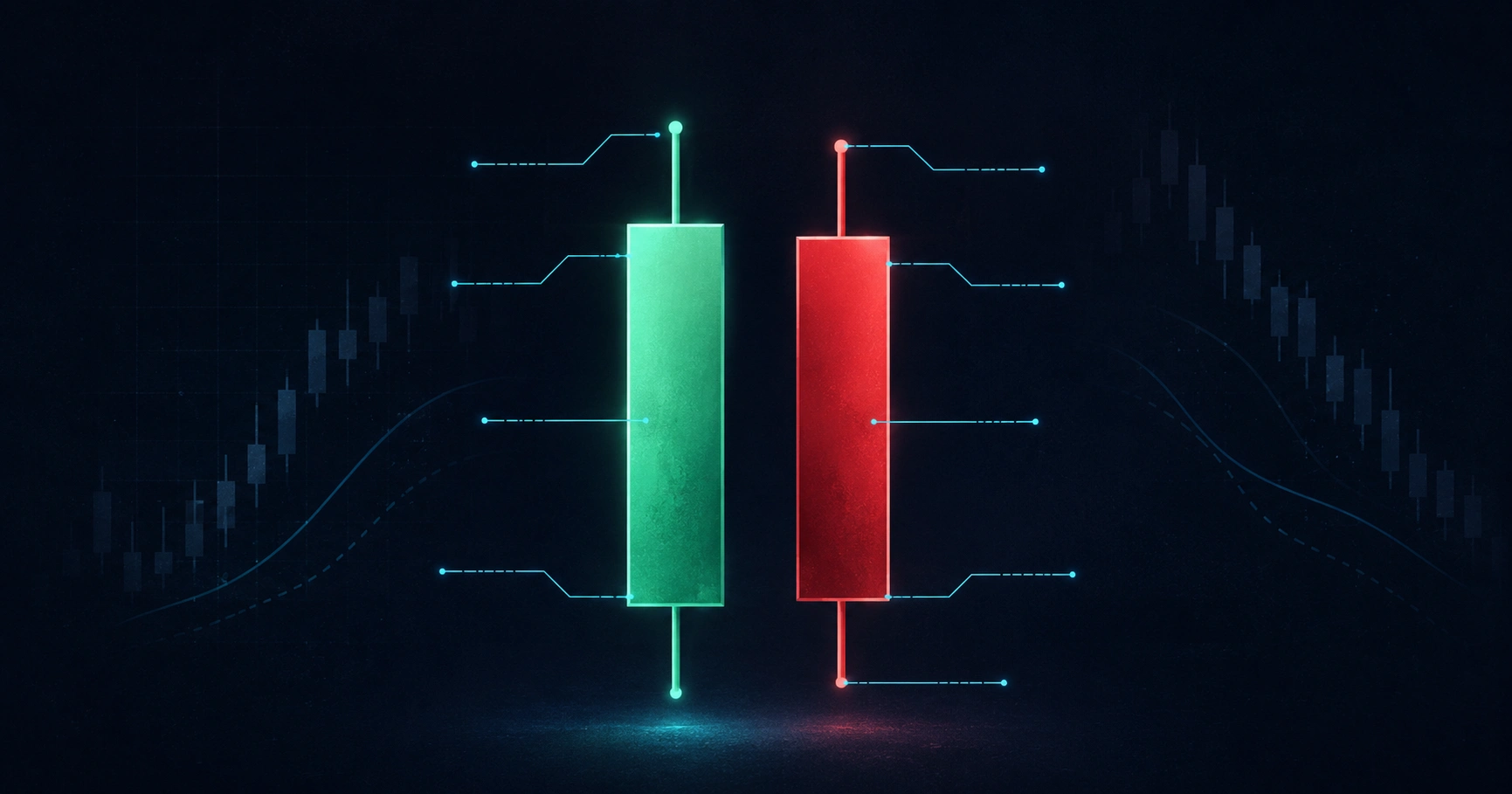
Pips, Lots and Position Size: The Forex Basics
Before any strategy question, you need to know exactly how much money one unit of movement represents. Most early losses trace back to this.
Forex has its own vocabulary, and misunderstanding it produces position sizes that are wrong by a factor of ten. That is worth getting right before anything else.
What a pip is
A pip is the standard smallest price increment for most currency pairs: the fourth decimal place. If EUR/USD moves from 1.0850 to 1.0851, that is one pip.
Yen pairs are the exception, quoted to two decimals, so a pip is the second decimal place. USD/JPY moving 150.25 to 150.26 is one pip.
Many brokers also quote a fifth decimal — a pipette, one tenth of a pip. Mistaking pipettes for pips is a common source of confusion.
Lot sizes
- Standard lot — 100,000 units. Roughly $10 per pip on USD-quoted pairs.
- Mini lot — 10,000 units. Roughly $1 per pip.
- Micro lot — 1,000 units. Roughly $0.10 per pip.
- Nano lot — 100 units, where offered.
Those pip values apply when the quote currency is USD. For other pairs the value must be converted, and it changes as the exchange rate changes.
Sizing from risk
The calculation that matters:
Position size = (Account × Risk %) ÷ (Stop in pips × Pip value)
With a 5,000 account, 1% risk (50), and a 25-pip stop: 50 ÷ 25 = 2 per pip, which is roughly two mini lots.
Notice the direction: the stop determines the size. The size does not determine the stop.
Placing a stop where the chart justifies it and then computing size is correct. Choosing a size first and then placing the stop wherever the risk happens to land is how accounts are damaged.
Costs to remember
The spread is charged on entry and functions as an immediate unrealised loss. A 25-pip target with a 2-pip spread means you need 27 pips of movement to reach your goal — an 8% larger move than you were planning for.
Positions held overnight also incur or earn swap depending on the interest differential between the two currencies. On longer holds this compounds and is easy to overlook.
Practise the arithmetic
Run the sizing calculation manually for a few trades before relying on a calculator. Understanding why the numbers change when the stop widens is what prevents the mistakes, and the tool will not teach you that.
Educational content only. Not financial advice. Leveraged forex trading carries substantial risk of loss.
See the models in action
Reading about forecasting is one thing. Create a free account and get 5 AI predictions a month — no card required.
Start free