What the VIX Actually Measures
The VIX is called the fear index, which is close enough to be useful and wrong enough to be misleading. It measures expected volatility, not expected direction.
The VIX is routinely described as the market's fear gauge. That shorthand hides what it is: a calculation of how much movement options traders are pricing in over the next thirty days.
Implied, not realised
Realised volatility measures how much an asset actually moved. Implied volatility is extracted from option prices and reflects how much movement the market expects. The VIX is implied volatility on S&P 500 options, annualised.
This distinction has a practical consequence: the VIX can rise while the market is calm, if participants are paying up for protection ahead of an event. It is a measure of anticipated turbulence.
Reading the number
A VIX of 20 implies an expected annualised move of about 20%. Divide by roughly 16 (the square root of 252 trading days) to get a rough daily expectation — so VIX 20 implies daily moves around 1.25%.
- Below 15 — historically calm. Complacency risk builds here.
- 15–20 — typical range for a functioning market.
- 20–30 — elevated. Something is worrying participants.
- Above 30 — stress. Above 40 has historically accompanied genuine dislocation.
These bands are descriptive, not predictive. The VIX has spent long stretches in each without the implied outcome arriving.
The asymmetry
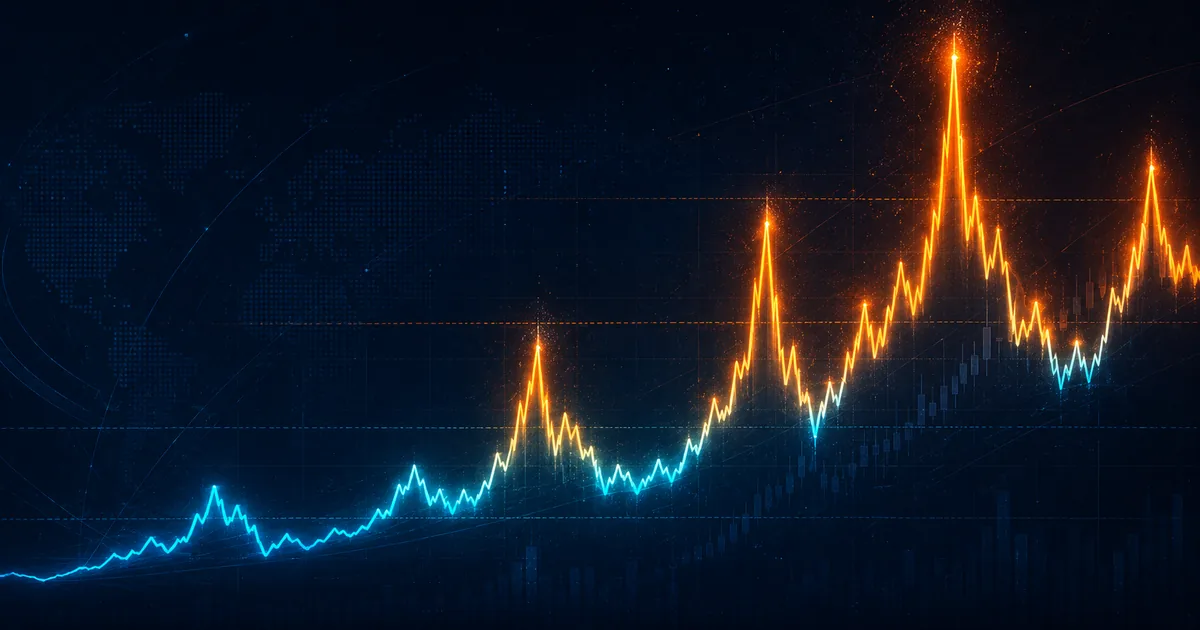
The VIX is strongly negatively correlated with equities, but not symmetrically. It spikes violently on declines and drifts down slowly on rallies. This reflects how people buy protection: urgently on the way down, gradually on the way up.
The VIX falls like a feather and rises like a rock.
What it cannot tell you
Direction. A high VIX means large expected moves, not downward ones — though because volatility clusters around declines, the two are entangled in practice.
It also cannot time anything. "The VIX is low, therefore a crash is coming" is not a forecast; low volatility can persist for years.
Practical use
Most useful as a position-sizing input rather than a signal. When implied volatility is elevated, the same position carries more risk than it did in calm conditions. Adjusting exposure to volatility is a more defensible response than trying to trade the index itself.
Educational content only. Not financial advice.
See the models in action
Reading about forecasting is one thing. Create a free account and get 5 AI predictions a month — no card required.
Start free